Tinnitus Sound Treatment: Neuromonics, Sound Therapy and Emerging Options
Tinnitus sound treatment uses external sound to change how the brain perceives internal ringing, buzzing or hissing. It does not cure tinnitus, but it can reduce awareness, ease distress and support habituation. At Ascent ENT Speciality Centre, patients in Dubai often begin with a proper audiology assessment before choosing a sound-based approach.
What Can Tinnitus Sound Treatment Do? Benefits and Limitations
Sound therapy works through three main mechanisms. Masking uses steady background noise to make tinnitus less noticeable. Distraction shifts attention toward pleasant or changing soundscapes. Habituation, used in structured programmes, helps the brain filter out the tinnitus signal over time.
What it cannot do is erase the underlying signal in most cases. Results vary, and some people respond better than others.
| Approach | How It Works | Best For |
| White noise or nature sounds | Provides steady background sound | Sleep, quiet environments |
| Hearing aids with sound features | Amplify external sound and stream therapy | Tinnitus with hearing loss |
| Tinnitus masking devices | Produce a matched or near-matched sound | Daytime relief, focus |
| Neuromonics | Personalised acoustic stimulation with counselling | Persistent, distressing tinnitus |
| Tinnitus retraining therapy | Long-term sound enrichment plus directive counselling | Habituation over months |
What Is Sound Therapy for Tinnitus?
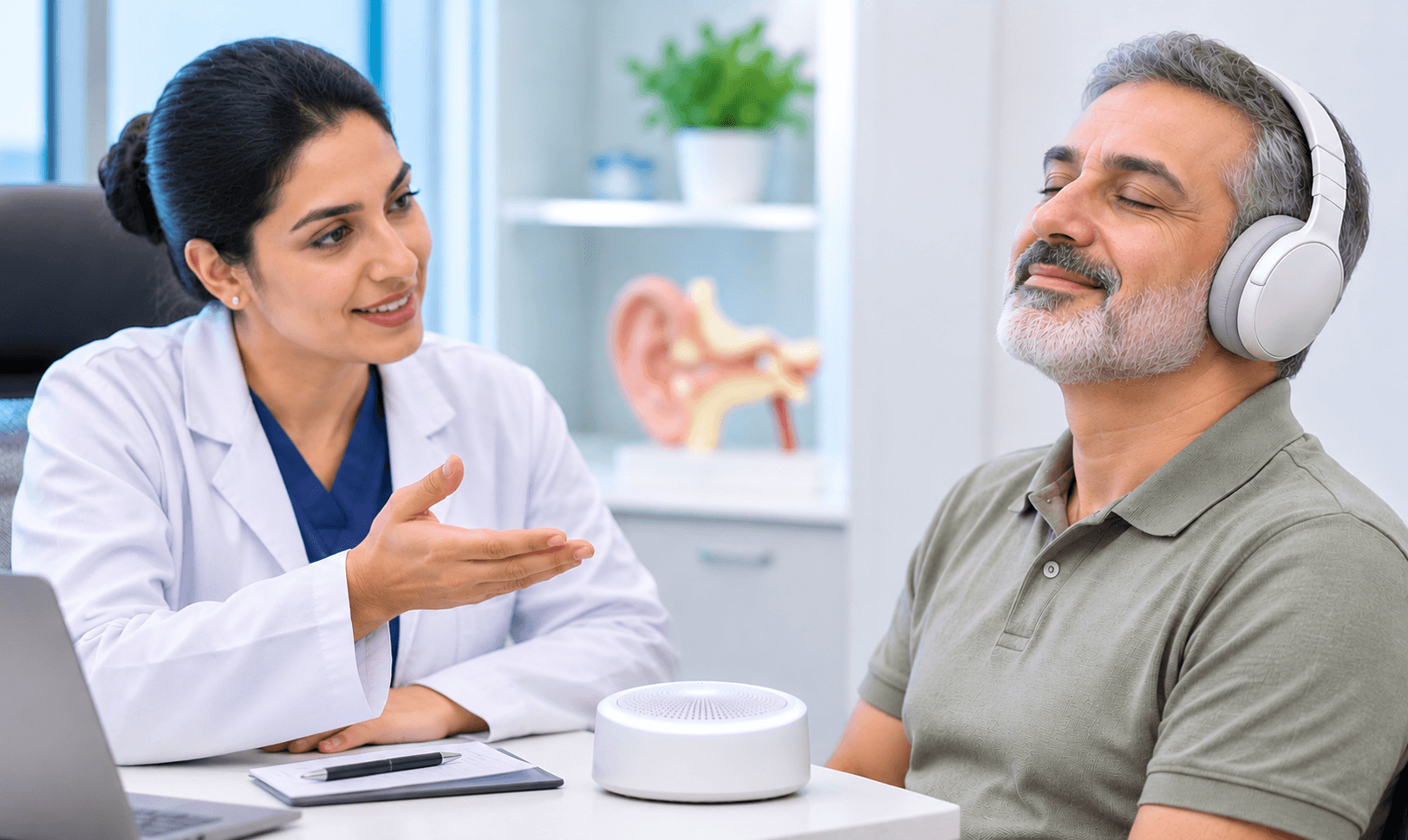
Sound enrichment for tinnitus means adding low-level, pleasant sound to otherwise quiet environments. In a silent room, the brain has less external input, so the internal tinnitus signal becomes more prominent. Adding gentle sound reduces that contrast.
Common choices include white noise, pink noise, brown noise, ocean waves, rain or soft instrumental music. Brown noise is often preferred by people with sound sensitivity because it has a lower, less hissy quality. The volume should stay low enough that conversation remains possible. The goal is not to cover the tinnitus completely but to make it less dominant.
How Does Sound Therapy Help Manage Tinnitus?
Many people find tinnitus most intrusive at night. Running a sound source during sleep can reduce the time spent lying awake focusing on the ringing. During work or study, low-level background sound can improve concentration by giving the brain an alternative signal.
Over weeks and months, consistent sound enrichment supports habituation. The brain gradually learns to treat the tinnitus as unimportant background information, much like the hum of an air conditioner. This is not instant, and it requires regular use, often two to four hours daily as a starting point.
What Are the Different Types of Tinnitus Sound Treatment?
White noise and background sound therapy are the simplest entry point. A fan, a sound machine or a phone app can work. There is no single best sound; the right one is the one the individual finds soothing and can tolerate for long periods.
Hearing aids with sound therapy features are relevant for the many people whose tinnitus accompanies hearing loss. By restoring access to everyday environmental sounds, hearing aids reduce the contrast that makes tinnitus noticeable. Some models include built-in sound generators or streaming options.
Tinnitus masking devices look similar to hearing aids but produce a sound matched to the person’s tinnitus pitch. They are less commonly used now than in the past, but they remain an option for specific cases.
Mobile apps and online tools offer free or low-cost masking sounds, including notched sound tracks that remove a narrow frequency band around the tinnitus pitch. Notched sound therapy is still being studied, and results are mixed.
What Is Neuromonics Tinnitus Treatment?
Neuromonics tinnitus treatment is a structured programme that combines personalised acoustic stimulation with counselling. The acoustic component uses music or broadband sound shaped to the individual’s hearing profile and tinnitus characteristics. The counselling component addresses the emotional response and teaches relaxation strategies.
The assessment process involves audiometric testing and tinnitus pitch and loudness matching. The device is typically worn for a set number of hours daily, often starting at a higher level and reducing over time. Potential benefits include reduced awareness and lower distress. Limitations include cost, the need for consistent use and the fact that it does not work for everyone.
What Is Tinnitus Retraining Therapy?
Tinnitus retraining therapy (TRT) pairs sound enrichment with directive counselling. The counselling reframes tinnitus as a neutral signal rather than a threat, which reduces the limbic system’s alarm response. The sound component uses low-level, stable noise to make the tinnitus less noticeable without masking it fully.
TRT differs from Neuromonics in its slower, habituation-focused model and its reliance on counselling as the primary driver. It typically runs over 12 to 24 months. Both approaches are recognised management strategies, not cures.
Emerging and Experimental Treatments
Neuromodulation for Tinnitus
Bimodal stimulation pairs sound with electrical or magnetic stimulation of other nerves, such as the tongue or vagus nerve. The idea is to encourage neuroplastic changes that reduce tinnitus perception. Some devices have received regulatory clearance in specific markets, but the evidence base is still developing and outcomes vary widely.
Hyperbaric Oxygen Treatment for Tinnitus
Hyperbaric oxygen therapy involves breathing pure oxygen in a pressurised chamber. It has been studied mainly for sudden sensorineural hearing loss with tinnitus, where early treatment may improve outcomes. It is not an established routine treatment for chronic tinnitus, and current guidelines do not recommend it for that purpose.
Other Emerging Approaches to Tinnitus Treatment
Research continues into personalised acoustic stimulation, closed-loop systems that adjust sound in real time, and combinations of sound therapy with cognitive behavioural therapy. These are promising but not yet standard care.
When Is Sound Therapy Not Enough to Manage Tinnitus?
Sound therapy works best when tinnitus is stable and not linked to a treatable medical cause. Pulsatile tinnitus, which follows the heartbeat, needs medical evaluation rather than masking. Sudden hearing loss with tinnitus is an emergency and requires immediate ENT assessment. Tinnitus that worsens, occurs in one ear only, or comes with dizziness or neurological symptoms should not be managed with sound apps alone.
Tinnitus Sound Treatment Assessment at Ascent ENT Dubai
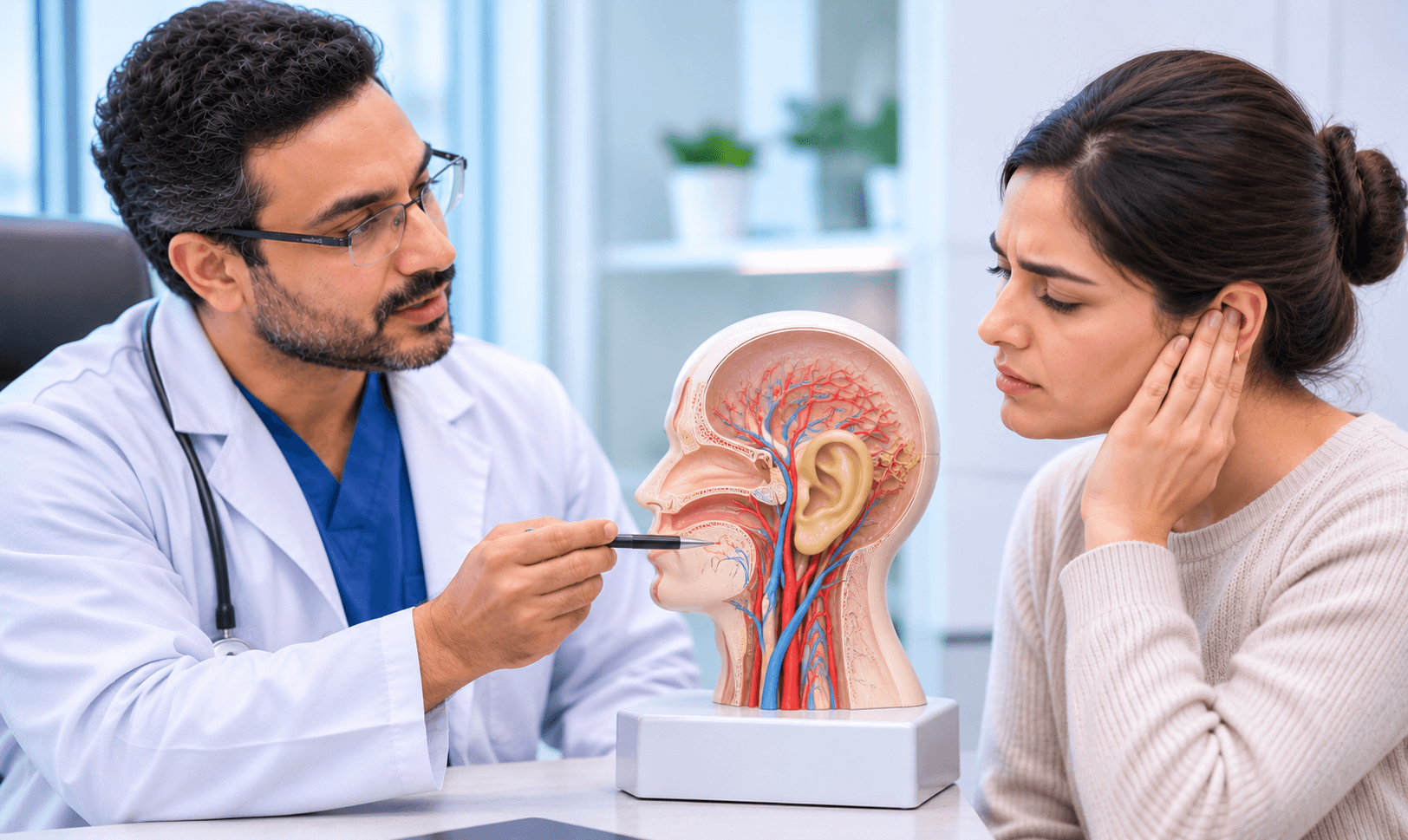
A structured approach starts with an ENT consultation and a hearing assessment. An audiologist in Dubai can measure hearing thresholds, match tinnitus pitch and loudness, and identify whether hearing loss or other factors are contributing. This information shapes the choice between sound therapy, hearing aids, counselling or referral for more specialised programmes.
For patients seeking Tinnitus Treatment in Dubai, Ascent ENT Speciality Centre offers ENT consultation and Audiology Services in Dubai. The clinic can assess tinnitus, identify red flags and guide patients toward appropriate sound-based management. Contact US to schedule an evaluation.
Frequently Asked Questions
What is the best sound therapy for tinnitus?
There is no single best sound. The most effective option is one the individual finds pleasant and can use consistently. Brown noise, nature sounds and personalised acoustic stimulation all have roles depending on the person and the clinical picture.
Can sound therapy completely cure tinnitus?
No. Sound therapy can reduce awareness and distress, but it does not eliminate the underlying signal in most cases. It is a management tool, not a cure.
What is the difference between Neuromonics and tinnitus retraining therapy?
Neuromonics uses a personalised acoustic device with structured counselling and a more intensive initial phase. TRT uses low-level sound enrichment with directive counselling over a longer period, focusing on habituation.
How long does tinnitus sound therapy take to work?
Some people notice reduced distress within weeks, while habituation typically takes months of consistent use. Individual response varies considerably.
Can white noise reduce ringing in the ears?
White noise can make ringing less noticeable by providing competing background sound, especially in quiet environments. It does not reduce the underlying signal.
Is hyperbaric oxygen treatment effective for tinnitus?
It may help in specific cases of sudden hearing loss with tinnitus when used early, but it is not an established treatment for chronic tinnitus.
Can tinnitus get worse without treatment?
Tinnitus can become more distressing without management, particularly if anxiety and poor sleep reinforce the perception. Professional assessment helps identify treatable causes and appropriate strategies.