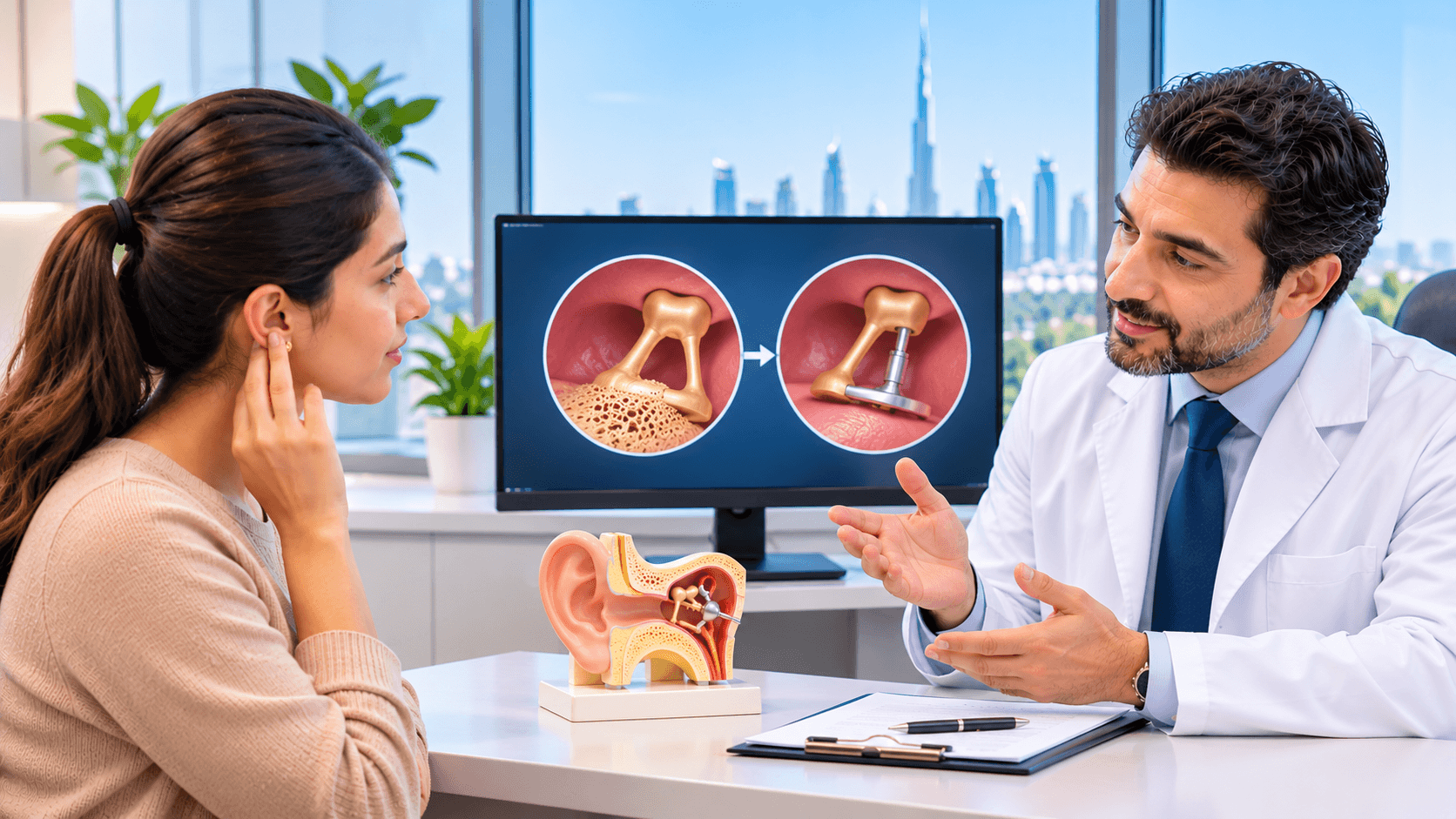
Stapes Disorders: Causes, Symptoms and Treatment Options
The stapes is the smallest bone in the human body. It sits in the middle ear and passes sound vibrations to the inner ear.
When the stapes become fixed or damaged, hearing drops and ringing or balance symptoms can follow. This blog explains stapes disorders seen in adults and children, what causes them, the symptoms to watch for and the best treatment options available today. We focus on otosclerosis and other conditions that limit how the stapes move.
If your hearing has changed, the specialists at Ascent ENT Speciality Centre are here to help patients across Dubai.
How the Stapes Works
The stapes connects the incus to the oval window of the cochlea. Each time sound enters the ear, the stapes move like a tiny piston which pushes inner ear fluid waves that your brain reads as sound. If the stapes cannot move freely, the chain that carries sound is interrupted and conductive hearing loss develops.
Stapes Disorders at a Glance
Several problems can affect how the stapes moves:
- Otosclerosis, abnormal bone growth around the stapes footplate that causes fixation and progressive conductive hearing loss
- Congenital stapes fixation, the bone is abnormally fixed from birth
- Ossicular chain issues, trauma or chronic ear disease can disrupt the link between the incus and stapes
- Stapes injuries, less common after head trauma or surgery
Otosclerosis, the Most Common Stapes Problem
Otosclerosis happens when new bone forms around the stapes footplate and the oval window. The stapes gradually stiffens which prevents efficient sound transfer. People often notice slowly worsening hearing in one ear then the other, tinnitus and sometimes dizziness. Risk is influenced by genetics and it can run in families. Some studies suggest faster progression during pregnancy.
Common Symptoms you Might Notice
- Muffled hearing that is worse in one ear at first
- Difficulty understanding speech, especially in noise
- Tinnitus, a ringing or buzzing sound
- A sense of ear fullness, rarely brief imbalance
Symptoms from stapes disorders tend to progress over months to years. Pain and discharge are usually absent which is one reason people delay seeking care.
How Doctors Diagnose Stapes Disorders
Assessment starts with an ear exam which is often normal in otosclerosis. The next steps are targeted hearing tests and middle ear measurements:
- Pure‑tone audiometry to check air and bone conduction, a specific dip around 2 kHz called the Carhart notch can appear in otosclerosis
- Tympanometry and acoustic reflexes, reflexes are often absent when the stapes is fixed
- High‑resolution temporal bone CT, sometimes used for surgical planning or to rule out other conditions
If these signs fit, book an appointment with an experienced Ent doctor Dubai for a full evaluation. Ascent ENT Dubai offers comprehensive audiology in Dubai, balance testing and advanced imaging coordination under one roof.
Treatment Options for Stapes Disorders
Treatment is tailored to your hearing goals, your daily communication needs and test results.
Non‑Surgical Care
- Watchful waiting, suitable when hearing is only mildly affected and communication is comfortable
- Hearing aids, excellent for many people, especially if surgery is not preferred or if both ears are involved
Medication has limited and mixed evidence for altering the bone process, so most care plans focus on improving hearing through hearing aids or surgery.
Stapedotomy or Stapedectomy
When the stapes is fixed by otosclerosis, a precise microsurgery can restore movement to the sound chain:
- Stapedotomy creates a tiny opening in the fixed footplate and places a small prosthesis to reconnect the chain
- Stapedectomy removes a portion of the footplate then places a prosthesis in its place
These procedures are highly specialized and performed through the ear canal using a microscope or endoscope. Many candidates can expect a marked improvement in conductive hearing and reduction in tinnitus. Learn more about the pathway and recovery on our page for stapedectomy surgery in Dubai.
If you have been diagnosed with otosclerosis or suspect it based on your hearing test, explore your options for Otosclerosis treatment in Dubai. Choosing the best stapedectomy surgeon in Dubai is important because outcomes depend on precise technique and careful follow‑up.
Recovery, Results and Safety
Most people return home the same day. Dizziness and a metallic taste on the tongue can occur for a short period. Your surgeon will advise you to keep the ear dry, avoid nose blowing, postpone heavy exercise and flying until cleared. Follow‑up hearing tests typically confirm the improvement once healing is complete.
Complications are uncommon, but every ear surgery carries risks such as persistent dizziness, changes in taste, tinnitus or less often sensorineural hearing loss. Your surgeon will explain these in detail and guide you to the safest choice for your ear.
Latest Trends in Stapes Care
- Endoscopic ear surgery, allows a wide view through the ear canal with less tissue disruption
- Laser‑assisted stapedotomy, helps create a precise micro‑opening in the fixed footplate
- Image‑guided planning, high‑resolution CT supports safer route planning in complex anatomy
- Modern piston prostheses, refined designs and materials aim to improve long‑term stability
- Same‑day care models, many patients complete surgery and early recovery without an overnight stay
Your specialist will match these techniques to your anatomy and hearing goals. If surgery is not right for you, today’s hearing aids offer discreet styles with excellent speech clarity in noise.
When to See a Specialist in Dubai
Seek expert advice if you notice any of the following:
- Gradually worsening hearing in one ear or both
- Persistent tinnitus
- Trouble following conversations in restaurants or meetings
- A family history of otosclerosis
For prompt assessment at an ENT Clinic in Dubai, contact the team at Ascent ENT specialty centre. If surgery is recommended, your case will be reviewed by an experienced otology team led by the best Ent specialist in Dubai.
Quick Comparison of Stapes Disorders and Treatments
| Condition | What happens to the stapes | Typical symptoms | First‑line management | Definitive treatment |
| Otosclerosis | Footplate becomes fixed by abnormal bone | Progressive conductive hearing loss, tinnitus | Hearing aids when mild | Stapedotomy or stapedectomy with prosthesis |
| Congenital fixation | Stapes is immobile from birth | Longstanding hearing loss noticed in childhood | Pediatric hearing aids, school support | Surgery when anatomy allows |
| Ossicular disruption | Link between incus and stapes is broken or malaligned | Sudden or stepwise hearing loss often after trauma | Hearing aids, protect the ear | Ossiculoplasty, sometimes combined with stapes repair |
| Post‑inflammatory stiffness | Scarring limits movement near the stapes | Conductive loss with ear disease history | Treat underlying ear problems | Reconstructive surgery as needed |
Why Choose Ascent for Stapes Care
- Experienced ENT surgeon with advanced otology training
- Full audiology and hearing care on site for precise testing and fittings
- Balance and vertigo clinic to assess dizziness that can accompany ear disease
- Modern operating microscopes, endoscopes and prostheses
From the first exam to long‑term hearing follow‑up, Ascent ENT Dubai provides coordinated care in one location.
Summary and next steps
The stapes are central to how we hear. When the stapes are fixed by otosclerosis or affected by trauma or congenital causes, sound cannot reach the inner ear efficiently which leads to progressive hearing loss and tinnitus. Accurate testing and a clear discussion of non‑surgical and surgical choices, including modern stapedotomy and stapedectomy, help most people regain confident hearing. Book your consultation with Ascent now to take the next step.
Frequently Asked Questions
Is every conductive hearing loss caused by a stapes problem?
No. Wax, eardrum issues, middle ear fluid and ossicular chain problems can all cause conductive hearing loss. Testing is essential to identify whether the stapes are involved.
What is the difference between stapedotomy and stapedectomy?
Both restore movement to a fixed stapes. Stapedotomy makes a tiny opening in the footplate and adds a prosthesis while stapedectomy removes part of the footplate before placing the prosthesis.
Will a hearing aid still be useful after stapes surgery?
Many people do not need a hearing aid for the treated ear after successful surgery. If there is inner ear loss or the other ear remains weaker, a hearing aid can still help.
How long is recovery after stapes surgery?
Most people rest for a few days and avoid strenuous activity for one to two weeks. The ear continues to heal for several weeks and your surgeon will time hearing tests to confirm results.