How to Clean and Maintain Hearing Aids in Dubai’s Climate
Sweat after an outdoor walk, dust during a windy commute and moisture around the battery compartment can all affect hearing aid performance. For people wearing hearing aids in Dubai, a regular cleaning and maintenance routine helps protect devices from everyday exposure to sweat, dust and moisture. Most everyday care involves a soft cloth, the correct cleaning tools and careful storage, but the details depend on your model. Your manufacturer’s instructions and audiologist’s advice should always take priority over general cleaning tips.
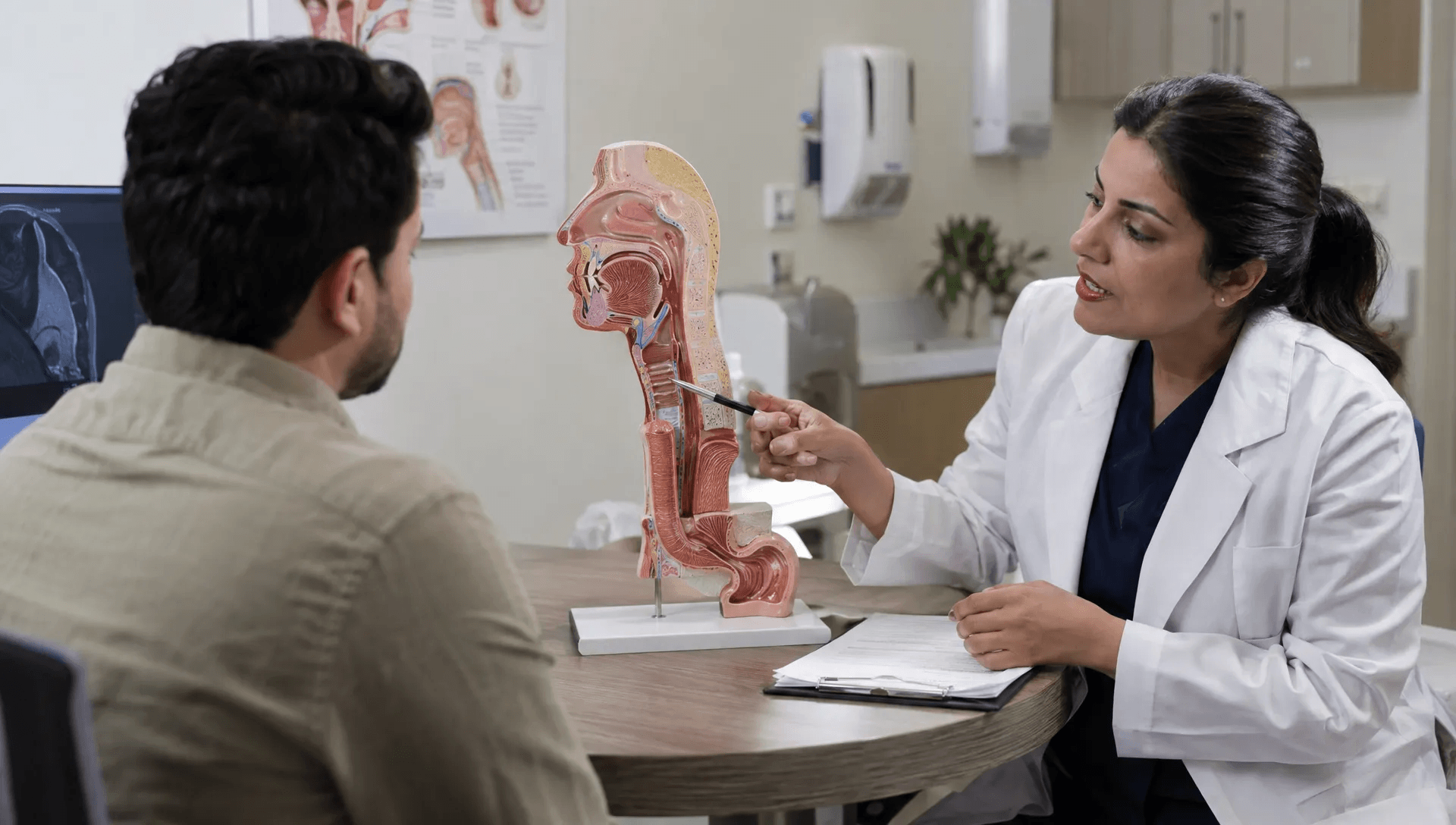
If you need professional advice about hearing aid use, fitting or hearing concerns, consult an audiologist in Dubai.
Why Hearing Aids Need Extra Care in Dubai’s Climate
Dubai’s heat can increase perspiration around behind-the-ear devices, while coastal humidity adds to moisture exposure. Dust may collect around microphone openings, sound outlets and charging contacts. Moving between air-conditioned indoor spaces and Dubai’s outdoor heat can expose hearing aids to changing temperature and moisture conditions. Follow the manufacturer's instructions for handling and storing your devices in these environments.
These conditions do not mean hearing aids cannot be worn outdoors. They mean the devices benefit from regular checks, especially after exercise or time outside.
Water resistance is not the same as being waterproof. Even a device with a water-resistance rating has limits. Follow its specific instructions for swimming, showering and exposure to sweat or salt water rather than assuming the rating covers every situation.
The National Institute on Deafness and Other Communication Disorders recommends keeping hearing aids away from heat and moisture and cleaning them as instructed.
How to Clean Hearing Aids Safely in Dubai
Prepare the Right Tools and Workspace
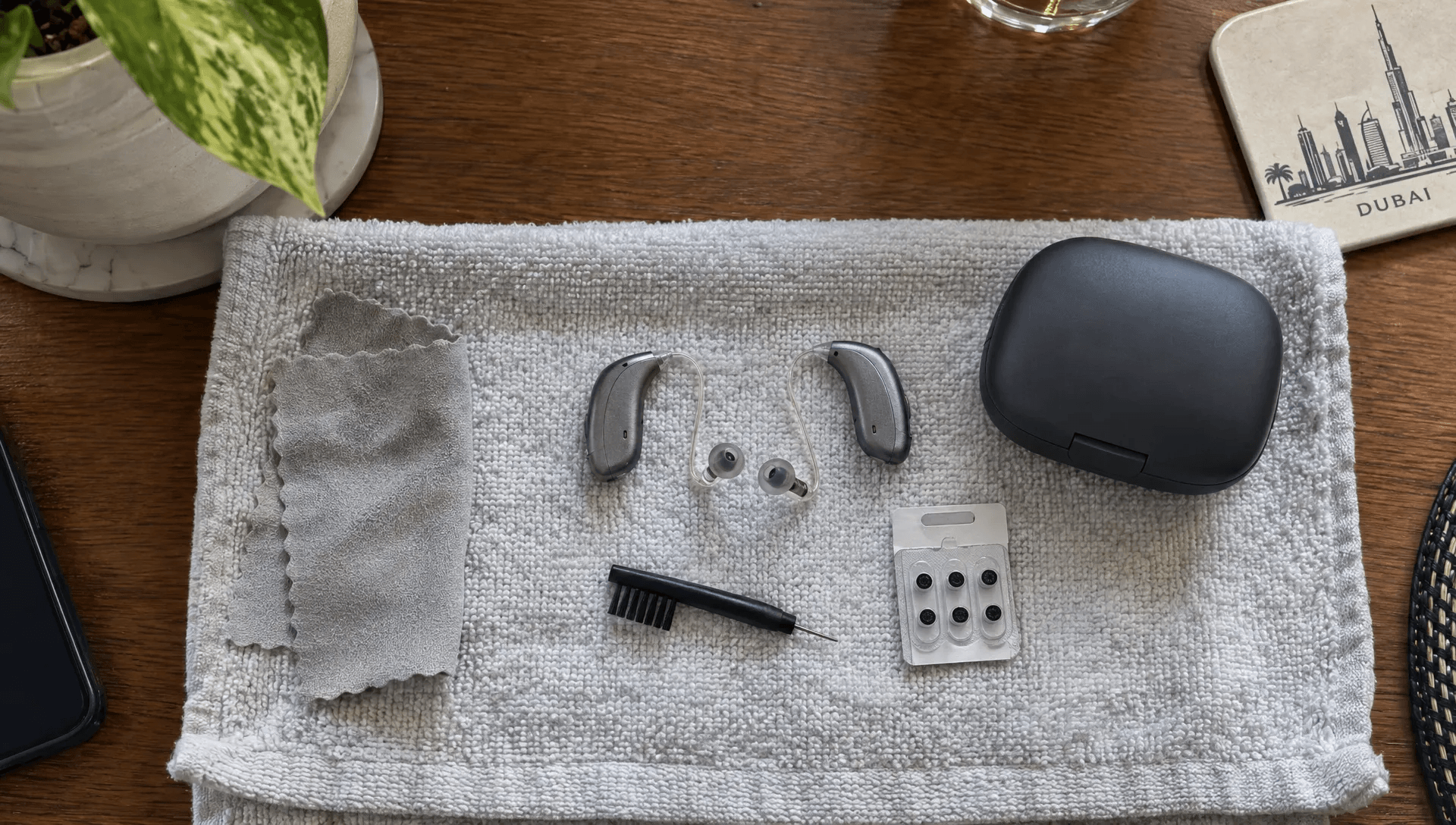
Wash and thoroughly dry your hands before handling your devices. Work over a clean towel on a table, rather than over a sink, so a dropped hearing aid or small part is less likely to be damaged or lost.
Keep a soft, dry cloth and the manufacturer-supplied cleaning brush nearby. Depending on your model, you may also need replacement wax filters, domes or an approved drying system. Use only the tools intended for your device.
Do not use a cleaning brush or tool on areas that the manufacturer has not identified as safe to clean. Avoid pushing debris further into microphone openings or sound outlets.
Unless explicitly approved for your model, avoid alcohol, household disinfectants, soap, hand sanitiser and wet cleaning wipes. Never rinse the hearing aid itself or insert pins, toothpicks or cotton buds into its openings.
Daily Hearing Aid Cleaning Routine
A brief check after removing your hearing aids helps prevent debris from accumulating:
- Switch off your hearing aids or remove the batteries if the manufacturer recommends doing so. For rechargeable models, follow the specific shutdown and handling instructions before cleaning.
- Wipe the exterior. Use a soft, dry cloth to remove perspiration, skin oils and visible dust. Do not rub forcefully across microphone openings.
- Brush away loose debris. Use the supplied brush gently on the areas identified in your care guide. Where practical, hold the opening downwards so debris falls away rather than into it.
- Inspect the sound outlet. Look for wax around the dome, earmould or wax filter without pushing tools into the opening.
- Check for damage or moisture. Look for cracked tubing, a loose dome, damaged casing or damp charging contacts before storing or charging.
Apply hairspray and other sprays before putting your hearing aids on, then allow the products to dry. This reduces direct exposure to residue that could collect around the microphones.
How to Clean and Replace Hearing Aid Domes and Wax Filters
Wax filters help prevent earwax from entering the sound outlet, but a blocked filter can make a hearing aid sound weak or silent. Replace it using the correct part and the technique demonstrated by your audiologist. Do not wash a disposable filter or try to clear it with a needle.
Remove a dome only if you have been shown how to do so. Check it for tears or trapped wax and follow the replacement guidance for your model. Before wearing the device again, make sure the dome is securely attached.
Never substitute a similar-looking filter or dome without checking compatibility. An incorrect fit can affect sound delivery or leave a component insecure. If a dome becomes lodged in your ear, do not try to retrieve it with tweezers; seek professional help.
If you are unsure how to replace a wax filter or dome, ask your audiologist to demonstrate the correct procedure rather than attempting to remove or replace the component yourself. You can also learn more about hearing aid options available at Ascent ENT
Cleaning Hearing Aid Earmoulds and Tubes Safely
Some traditional behind-the-ear hearing aids have a detachable earmould connected by a hollow acoustic tube. The earmould may be washable after it has been disconnected from the hearing aid, but only if the manufacturer permits this and you have been shown the correct method.
The mould and tubing must be completely dry before reconnection. An approved air blower may be suitable for certain tubes; do not blow through them with your mouth.
Receiver-in-canal devices are different. Their thin wire leads to a small electronic speaker near or inside the ear canal. Do not wash or immerse that speaker or wire assembly. If you cannot confidently identify which parts contain electronics, ask your audiologist before separating or washing anything.
How to Protect Hearing Aids from Sweat and Moisture
Choosing the Right Hearing Aid Drying Method
After exercise or noticeable sweating, remove your devices somewhere safe and wipe away surface moisture. Check the area behind your ears too, since replacing a dry device onto damp skin can expose it to moisture again.
A manufacturer-approved desiccant container or electronic drying system may help manage moisture, particularly if you sweat frequently or spend extended periods outdoors. Check compatibility with your hearing aids and charging system before use, as some drying systems are unsuitable for particular rechargeable models or batteries.
For disposable-battery devices, your instructions may recommend opening the battery door during storage. Keep batteries and devices securely away from children and pets. Never try to open a sealed rechargeable battery compartment.
For rechargeable hearing aids, follow the approved charging and drying sequence. Do not put damp devices into the charger. If the hearing aid has been submerged or water may have entered it, contact your audiologist or manufacturer before charging or restarting it.
Why You Should Avoid Heat-Based Drying Methods
Do not use a hairdryer, oven, microwave, radiator or direct sunlight to dry hearing aids. A parked car in Dubai is also an unsuitable storage place because temperatures can become very high.
Rice is not a substitute for a compatible drying system and may introduce dust or particles. Compressed air can also damage delicate components or push debris further inside.
Store devices according to their instructions in a clean, dry place away from bathrooms, kitchen steam and direct exposure to air-conditioning moisture or condensation. Keep the storage case dry as well.
Hearing Aid Cleaning and Maintenance Schedule
Daily care should respond to how you use your devices, not just the calendar. Someone who exercises outdoors may need more frequent moisture checks than someone who spends most of the day indoors.
| When | What to check or do | Important precaution |
| Each day | Wipe the casing, inspect the sound outlet and check for visible moisture | Use the cleaning method approved for your model |
| After exercise or heavy sweating | Dry the exterior and follow the recommended drying routine | Do not charge while damp |
| Regularly, as instructed | Check domes, wax filters, tubing and charging contacts | Replace parts only with compatible components |
| When sound becomes weak or distorted | Check power, visible wax blockage and device settings | Do not probe openings or dismantle the casing |
| At your recommended follow-up | Review device condition, fit and hearing performance | Bring your charger and accessories if relevant |
There is no single replacement interval that suits every wax filter or dome. Earwax production, device design and daily wear vary. Follow your model’s guidance and the schedule agreed with your audiologist.
How to Troubleshoot Common Hearing Aid Problems
If your hearing aid sounds unusually quiet and your hearing has not suddenly changed, start with simple checks: confirm that it is switched on, has sufficient power and is on the expected programme or volume setting. Inspect the sound outlet for visible wax and check that the dome or earmould is seated correctly.
Whistling may relate to fit, a damaged component or earwax in the ear canal. Intermittent sound can have several causes, including moisture or an electrical fault. These symptoms do not identify the cause on their own.
If whistling continues after checking the fit and visible components, an audiologist can assess whether the earmould, dome, device settings or ear canal needs attention.
Clean only as instructed and replace user-serviceable parts only if you know the correct procedure. If the problem continues, arrange an audiology review rather than repeatedly increasing the volume.
Cleaning the device will not remove wax from your ear. Ascent’s guidance on safe earwax removal and what to avoid explains why inserting objects into the canal can make a blockage worse.
When to Consult an Audiologist or ENT Specialist
Remove the hearing aid if wearing it causes pain, skin irritation or skin breakdown. Do not continue wearing a device that causes persistent discomfort until the problem has been assessed. Ear discharge, bleeding or swelling also requires medical assessment rather than routine cleaning.
A sudden drop in hearing needs urgent medical assessment, even if you suspect a blocked or faulty hearing aid. This is particularly important when hearing changes over hours or a few days, with or without tinnitus, dizziness or a feeling of fullness. Do not delay care while trying new filters or drying the device overnight.
A persistent but gradual change also deserves review. An audiologist or ENT specialist can help distinguish a device issue from earwax, an ear condition or a change in hearing.
If you experience a sudden or unexplained change in hearing, read more about sudden hearing loss and when to seek medical attention.
Hearing Aid Care and Audiology Support at Ascent ENT Dubai
If cleaning does not restore normal performance, or your hearing aids repeatedly become uncomfortable or unreliable, contact Ascent ENT Speciality Centre in Dubai to discuss audiology services, hearing aid fitting and programming. Bring your hearing aids, charger and details of the problem so the clinician can assess whether your devices, their fit or your ear health need attention.
Frequently Asked Questions
Can I clean my hearing aids with alcohol wipes?
Only if the manufacturer explicitly approves that product for your exact device and component. Otherwise, use a soft, dry cloth and the supplied cleaning tools. Alcohol and other chemicals can damage some materials or coatings.
Should I use a hearing aid dryer every night?
Follow your manufacturer’s instructions and audiologist’s advice. Regular drying may be helpful with frequent sweat or humidity exposure, but the dryer must be compatible with your devices, particularly if they have rechargeable batteries.
Can I wear hearing aids while exercising outdoors in Dubai?
Check your model’s sweat and water-resistance guidance. A compatible retention accessory may help keep devices secure, but it should not cover microphones. Afterwards, inspect for moisture and follow the approved cleaning and drying routine.
What should I do if a hearing aid falls into water?
Remove it promptly and switch it off if this can be done safely. Remove a disposable battery if instructed, but do not open a sealed rechargeable device. Wipe the exterior and contact your audiologist or manufacturer for model-specific advice before restarting or charging it.
How often should I clean my hearing aids in Dubai?
Clean your hearing aids according to the manufacturer's instructions, usually as part of a daily care routine. If you sweat heavily or spend time outdoors in dusty or humid conditions, check your devices more frequently and follow the recommended drying procedure.