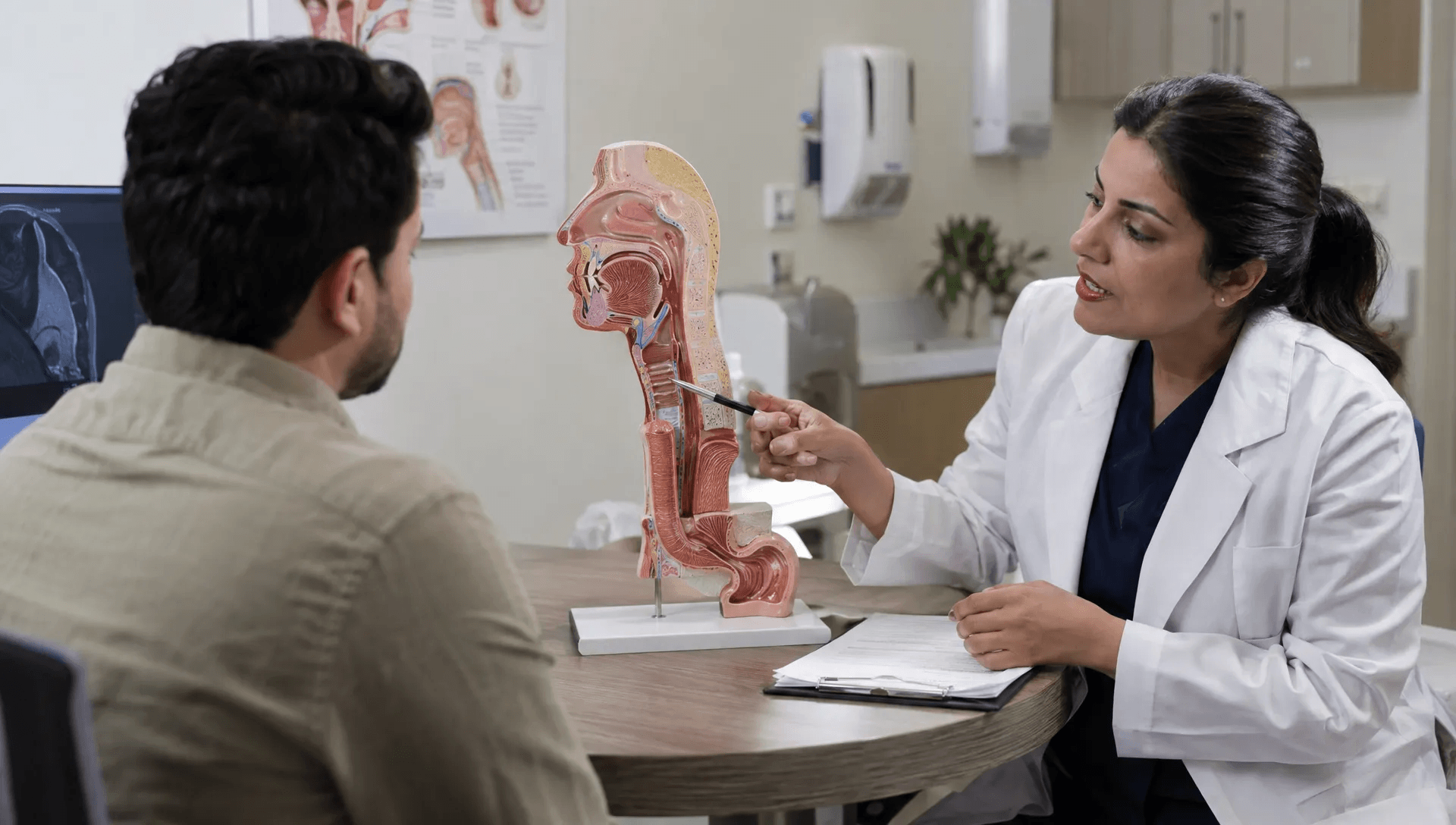
Difficulty Swallowing: Causes and When to Seek Urgent Care
A meal that suddenly feels stuck, coughing whenever you drink or pain when swallowing can all signal different problems. Difficulty swallowing, also called dysphagia, needs assessment when it persists, recurs or affects eating and drinking. Some causes are straightforward to treat, but others need immediate hospital care. The first step is to recognise whether breathing, the ability to swallow saliva or hydration is at risk.
When Does Difficulty Swallowing Require Urgent Medical Care?
When Should You Call an Ambulance for Difficulty Swallowing?
In Dubai and elsewhere in the UAE, call 998 for an ambulance if someone has any of the following:
- Choking with an inability to breathe, speak or cough effectively.
- Noisy or difficult breathing, blue or grey lips, collapse or rapidly worsening throat swelling.
- Sudden swelling of the tongue or lips, especially with breathing problems, faintness or other signs of a severe allergic reaction.
- Sudden swallowing problems alongside facial drooping, arm weakness, slurred speech or other possible stroke symptoms.
The UAE Government’s emergency guidance lists 998 as the ambulance number. Follow the dispatcher’s instructions and provide age-appropriate choking first aid if directed. Do not put your fingers into someone’s mouth unless you can clearly see and safely remove the object.
If the person can cough forcefully and breathe, encourage coughing and watch closely. Do not offer food or drink to someone who is choking.
When Does Food Stuck in the Throat Require Emergency Care?
An inability to swallow saliva, drooling because saliva will not go down or food remaining stuck after a meal requires emergency assessment, even if breathing seems normal. Do not try to push the food down with water, fizzy drinks or another mouthful. Avoid eating or drinking while seeking emergency care.
Severe throat pain with drooling, a muffled voice, difficulty opening the mouth or neck swelling also needs immediate assessment. These signs can indicate a deep infection that may threaten the airway. Stay upright and do not try to inspect deeply inside the throat, particularly in a distressed child.
When Should You Seek Same-Day Medical Assessment?
Difficulty swallowing warrants same-day medical advice if you repeatedly cough or choke with drinks, cannot take enough fluids or develop fever after a choking episode. A wet, gurgly voice after swallowing can also indicate that swallowing is unsafe.
Very little urine, dark urine, dizziness or unusual drowsiness may suggest dehydration. New breathlessness, chest pain or marked deterioration needs emergency care rather than a routine appointment.
What Is Difficulty Swallowing (Dysphagia)?
Swallowing involves coordinated movement through the mouth, throat and oesophagus, the tube connecting the throat to the stomach. A problem at any stage can interfere with eating and drinking.
Oropharyngeal dysphagia affects starting a swallow or moving food through the throat. Clues include coughing immediately after a sip, food coming back through the nose or needing several attempts to swallow.
Oesophageal dysphagia involves food passing through the food pipe. People may feel food sticking in the neck or chest after the swallow has started. Where the sensation occurs does not always identify where the problem is.
Painful swallowing is called odynophagia. It can occur with or without a passage problem. A lump sensation between meals, sometimes called globus, is different if food and drinks pass normally. Do not assume symptoms are anxiety-related when swallowing is genuinely impaired.
The NHS overview of dysphagia describes symptoms including coughing during meals, food sticking and a wet voice after eating or drinking.
What Are the Common Causes of Difficulty Swallowing?
The causes of difficulty swallowing range from temporary inflammation to narrowing or impaired muscle coordination. Symptom patterns help guide investigations, but they cannot confirm a diagnosis on their own.
Can Throat Infections and Inflammation Cause Difficulty Swallowing?
Tonsillitis and other throat infections can make swallowing painful. A more serious infection, such as a peritonsillar abscess, can cause severe one-sided pain, a muffled voice and difficulty opening the mouth.
Ascent’s guide to peritonsillar abscess symptoms and treatment explains this condition in more detail. However, drooling, breathing changes or rapidly worsening swelling should prompt emergency assessment rather than waiting for a clinic visit.
Antibiotics are not appropriate for every sore throat. Treatment depends on the cause and whether complications are present.
Can Acid Reflux and Oesophageal Problems Cause Difficulty Swallowing?
Gastro-oesophageal reflux can inflame the oesophagus and sometimes lead to scarring or narrowing. Reflux reaching the throat may also contribute to irritation and voice symptoms. However, persistent swallowing problems should not automatically be attributed to reflux.
Ascent’s explanation of laryngopharyngeal reflux symptoms covers throat-related reflux complaints. A separate swallowing assessment may still be necessary.
Another cause is eosinophilic oesophagitis, an inflammatory condition that can cause solid food to stick. It may occur in people with asthma, eczema or allergies and usually requires endoscopy with biopsies for diagnosis.
Can Neurological Conditions Cause Difficulty Swallowing?
Stroke, Parkinson’s disease and other neurological conditions can affect swallowing coordination. Some people struggle with both liquids and solids, while others have difficulty controlling food in the mouth or triggering a swallow.
Difficulty swallowing can also develop after certain head and neck operations or cancer treatments. Dry mouth, poorly fitting dentures and reduced chewing ability may add to the problem.
Age-related changes can contribute, but recurrent choking or reduced food intake should not be dismissed as a normal part of getting older.
Can Structural Problems or Growths Cause Difficulty Swallowing?
Rings, pouches, benign narrowing and tumours can obstruct the swallowing passage. Problems mainly with solids may suggest narrowing, while symptoms affecting both solids and liquids can suggest a movement disorder. There is overlap, so these are clues rather than diagnostic rules.
Progressively worsening symptoms, unexplained weight loss, a persistent neck lump, continuing hoarseness or blood in saliva need prompt medical assessment. These symptoms do not necessarily mean cancer, but they should not be managed indefinitely with home remedies or reflux medicines.
How Is Difficulty Swallowing Diagnosed?
A clinician will ask when symptoms started, whether solids or liquids are harder to swallow and whether there is pain, coughing, regurgitation or weight loss. Mention any recent choking episode, new medication, previous stroke or head and neck treatment.
It helps to describe a specific event: “Water makes me cough immediately” gives different information from “Meat sticks behind my breastbone.” Do not deliberately repeat a food or drink that caused choking just to test the symptom.
An ENT examination may include the mouth, throat and neck, with a flexible camera passed through the nose when appropriate. This allows inspection of the throat and voice box, but it does not examine the whole oesophagus.
Further tests depend on the suspected cause:
| Assessment | What it can help evaluate |
| Specialist swallowing assessment | Swallowing safety, oral control and possible aspiration risk |
| FEES, an endoscopic swallowing assessment | How swallowing affects the throat, including residue and material entering the airway |
| Videofluoroscopic swallow study | Movement of food and liquid through swallowing using moving X-ray images |
| Upper gastrointestinal endoscopy | Inflammation, narrowing or other abnormalities in the oesophagus, with biopsies when needed |
| Barium swallow or oesophageal manometry | Selected structural or movement problems in the food pipe |
Not everyone needs every test. Assessment for difficulty swallowing may involve an ENT specialist, gastroenterologist or speech and language therapist, depending on the symptoms and findings.
What Can You Do About Difficulty Swallowing Before Your Appointment?
These measures are only appropriate if you can already swallow safely and have none of the emergency warning signs above. Do not use home adjustments to delay assessment of persistent or worsening symptoms.
Eat sitting upright, take your time and avoid talking while chewing. Stop if food sticks, breathing changes or repeated coughing starts. Avoid foods that have already caused problems rather than repeatedly trying them.
Do not automatically switch to thickened drinks or assume thin liquids are safer. The safest texture varies between swallowing disorders and should be recommended after assessment. Swallowing exercises also need to match the underlying problem.
If tablets are difficult to swallow, ask a pharmacist or clinician about suitable alternatives. Do not crush tablets or open capsules without checking, as this can change how a medicine works.
Keep a brief record of the foods or drinks involved, where the sticking sensation occurs and any associated coughing or pain. Note weight changes and whether you are drinking and urinating normally. This information can help the clinician judge urgency and choose appropriate tests.
Difficulty Swallowing Assessment at Ascent ENT Dubai
For ongoing swallowing symptoms without emergency warning signs, an ENT assessment at Ascent ENT Speciality Centre in Dubai can help evaluate throat-related causes and determine appropriate next steps. Bring details of your symptoms, medicines and any previous test results.
If you cannot swallow saliva, have food stuck or develop breathing problems, seek emergency hospital care instead of waiting for a clinic appointment.
Frequently asked questions
Can swallowing problems happen without coughing?
Yes. Food, liquid or saliva can sometimes enter the airway without triggering an obvious cough, known as silent aspiration. Recurrent chest infections, unexplained weight loss or swallowing changes after a stroke may warrant assessment even without choking.
Should I see an ENT specialist or a gastroenterologist?
An ENT specialist often assesses problems involving the mouth, throat, voice or starting a swallow. A gastroenterologist assesses the oesophagus and stomach. Symptoms overlap, so your first clinician may refer you for another specialist assessment. Emergency warning signs should be assessed in hospital first.
Can children develop difficulty swallowing?
Yes. Causes include infections, foreign objects, structural differences and coordination problems. Sudden drooling, refusal to swallow, breathing changes or symptoms after swallowing an object need urgent assessment. Suspected button battery ingestion is an emergency even if the child initially seems well. Ongoing coughing during feeds, poor growth or unusually long mealtimes also needs review.
Does dysphagia always mean cancer?
No. Infections, inflammation, narrowing and neurological conditions are other possible causes. Nevertheless, progressive symptoms, unexplained weight loss, a neck lump or persistent voice changes require prompt investigation rather than reassurance without examination.