How a Sleep Study Diagnoses Obstructive Sleep Apnea
A sleep study diagnoses obstructive sleep apnea by recording how you breathe, sleep and oxygenate your blood through the night. For many people, the first clues are loud snoring, choking sounds, morning headaches or feeling exhausted despite spending enough hours in bed. The sleep study turns those symptoms into measurable data, helping your doctor confirm whether your airway is repeatedly narrowing or closing during sleep.
Obstructive sleep apnea (OSA) is more than a snoring problem. During sleep, the muscles around the throat relax. In OSA, the upper airway becomes partly or fully blocked, reducing airflow. These respiratory events may cause brief cortical arousals (short awakenings detected by brain activity monitoring), oxygen desaturation (a drop in blood oxygen levels), or both. The brain may briefly wake the body to help reopen the airway. Not every respiratory event produces a measurable oxygen drop.
Why Are Sleep Apnea Symptoms Not Enough for Diagnosis?
Snoring, daytime sleepiness and witnessed pauses in breathing are strong warning signs, but they do not show how often breathing stops or how low oxygen levels fall. Some people snore heavily without having OSA, while others have significant sleep apnea with less dramatic snoring. If you want to understand that difference first, Ascent explains how snoring and sleep apnea are related but not the same.
A sleep study is used because it captures objective signals. It can show whether breathing events are obstructive, central or mixed, whether they occur mainly during REM sleep, whether they worsen while lying on the back and whether oxygen drops are clinically meaningful. That detail matters because treatment depends on the pattern and severity of the disorder.
How Does a Sleep Study Diagnose Obstructive Sleep Apnea?
A sleep study diagnoses obstructive sleep apnea by tracking several body functions at the same time, then comparing breathing events with sleep stages, oxygen changes and arousals from sleep. The most complete test is called polysomnography, usually performed overnight in a sleep lab.
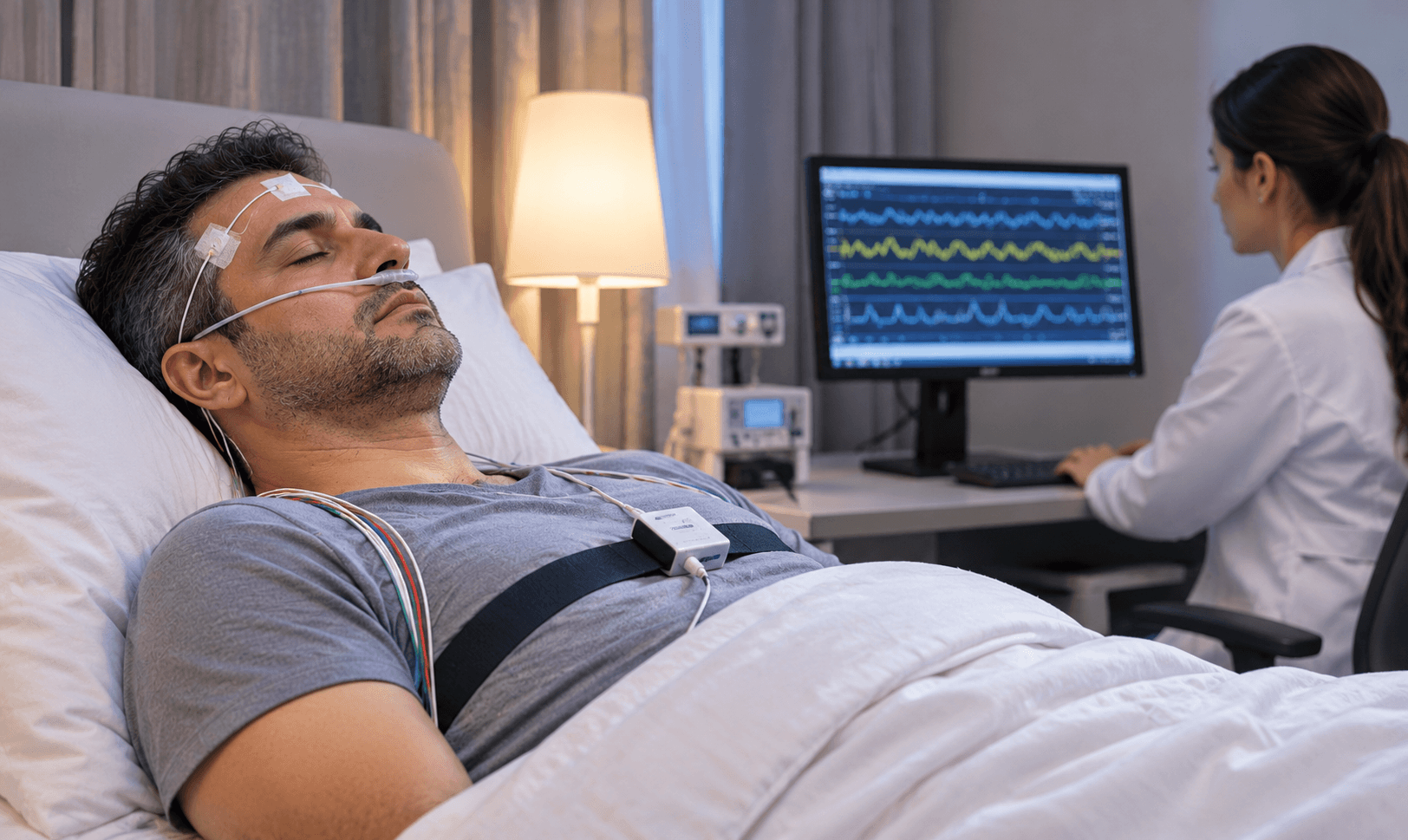
During polysomnography, sensors may record brain activity, eye movement, muscle tone, airflow, chest and abdominal breathing effort, oxygen saturation, heart rhythm, body position and snoring sounds. The goal is not simply to prove that someone snores. The goal is to identify repeated episodes where breathing is reduced or paused. Polysomnography also identifies central sleep apnea events, where respiratory effort is absent, helping specialists distinguish obstructive events from central events.
.
The American Academy of Sleep Medicine recommends polysomnography or a technically adequate home sleep apnea test for diagnosing OSA in uncomplicated adults with signs of moderate to severe disease. In-lab testing is preferred when there are complicating medical conditions, suspected non-obstructive sleep disorders or inconclusive home test results.
If a home sleep apnea test is negative, inconclusive or technically inadequate despite ongoing clinical suspicion of OSA, an in-lab polysomnography is recommended for further evaluation.
In-Lab Sleep Study vs Home Sleep Apnea Test: What Is the Difference?
Your doctor may recommend either an overnight sleep lab test or a home sleep apnea test. Both can be useful, but they are not interchangeable for every patient.
| Test type | What it usually records | Best suited for | Key limitation |
| In-lab polysomnography | Sleep stages, airflow, breathing effort, oxygen, heart rhythm, limb movement, body position and snoring | Complex cases, children, unclear symptoms, other sleep disorders or failed home testing | Requires sleeping in a monitored lab setting |
| Home sleep apnea test | Airflow, breathing effort, oxygen level and pulse, depending on the device | Adults with a high likelihood of uncomplicated moderate to severe OSA | Usually estimates breathing events without measuring full sleep stages |
A home test may be convenient, but it can underestimate severity if it calculates events over total recording time rather than true sleep time. It may also miss other causes of poor sleep, such as periodic limb movements or insomnia. For children, people with significant heart or lung disease, neuromuscular disorders or suspected central sleep apnea, an in-lab study is often more appropriate.
A negative or inconclusive home sleep apnea test does not rule out OSA when clinical suspicion remains. In such cases, an in-lab polysomnography should be performed for further evaluation.
What Happens Before and During a Sleep Study?
Before the test, your doctor will usually take a sleep history and review symptoms, medications, medical conditions and airway factors. An ENT assessment may look at nasal blockage, tonsil size, palate position, jaw structure and other areas that can contribute to upper airway narrowing.
On the night of an in-lab test, a sleep technologist places small sensors on the scalp, face, chest, legs and finger. Belts around the chest and abdomen measure breathing effort. A small airflow sensor sits near the nose and mouth. The setup can feel unfamiliar, but the sensors are designed to allow natural sleep as much as possible.
For a home test, you are shown how to attach the equipment yourself before sleeping in your own bed. The device is returned the next day or according to the clinic’s instructions, then the data is reviewed by trained professionals.
What Does a Sleep Study Report Measure?
A sleep study diagnoses obstructive sleep apnea through patterns in the report, not one isolated number. The most familiar measurement is the apnea hypopnea index (AHI), which counts breathing pauses and partial obstructions per hour of sleep.
An apnea is a pause in breathing airflow. A hypopnea is a partial reduction in airflow linked with oxygen drop, arousal from sleep or both. In a home sleep apnea test, you may see the respiratory event index (REI) instead of AHI because the device may not measure exact sleep time.
| Adult result category | AHI range | General meaning |
| Normal or below diagnostic threshold | Fewer than 5 events per hour | OSA is not usually diagnosed from AHI alone |
| Mild OSA | 5-14 events per hour | Breathing events occur repeatedly and may need treatment based on symptoms and risks |
| Moderate OSA | 15-29 events per hour | Treatment is usually recommended |
| Severe OSA | 30 or more events per hour | Higher risk burden and stronger need for timely management |
The report also looks at oxygen saturation, lowest oxygen level, time spent below normal oxygen levels, heart rhythm changes, snoring intensity, body position and sleep architecture. REM sleep is often relevant because throat muscles relax more deeply during this stage, so some people have worse OSA in REM sleep.
Why Are Oxygen Levels and Sleep Disruptions Important?
Two people can have the same AHI but different clinical risk. One may have short events with mild oxygen dips. Another may have longer obstructions with deeper oxygen drops and frequent arousals. Your doctor interprets the full pattern alongside your symptoms, blood pressure, heart health, weight, nasal function and daytime alertness.
Repeated oxygen drops can strain the cardiovascular system, and repeated arousals can fragment sleep. That is why untreated OSA is commonly associated with morning headaches, poor concentration, irritability, daytime sleepiness and increased accident risk. It can also worsen existing hypertension or metabolic problems.
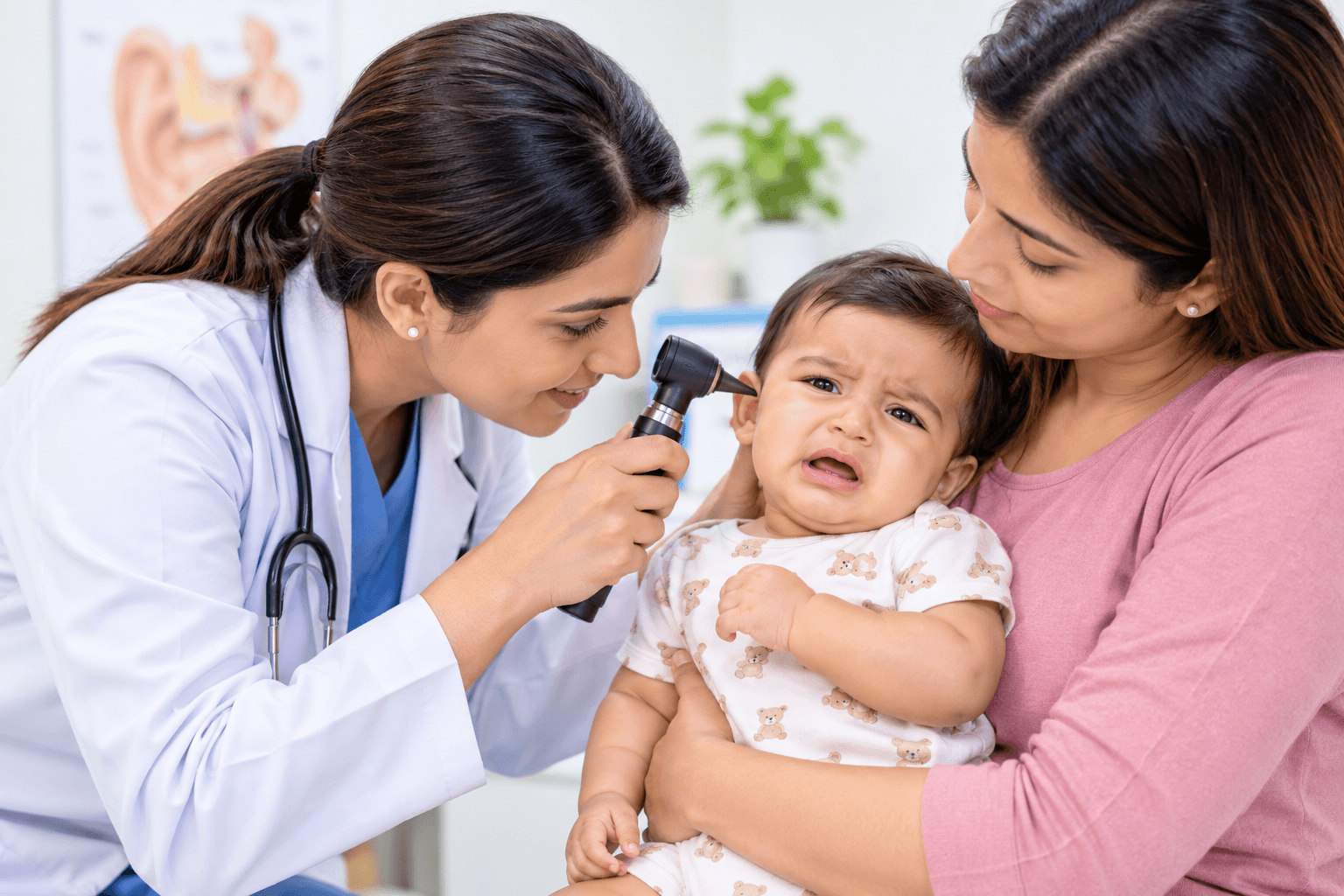
Children are assessed differently from adults. Pediatric OSA may show up as restless sleep, mouth breathing, bedwetting, attention issues or growth concerns rather than obvious daytime sleepiness. If a child has habitual snoring or witnessed breathing pauses, pediatric ENT evaluation and appropriate sleep testing may be needed.
Children have different diagnostic criteria from adults, and an overnight polysomnography is the standard investigation when pediatric obstructive sleep apnea is suspected. Adult AHI severity categories should not be applied to children.
How Do Sleep Study Results Guide Sleep Apnea Treatment?
Once a sleep study diagnoses obstructive sleep apnea, the next step is matching treatment to the cause, severity and patient profile. Continuous positive airway pressure (CPAP) is a common treatment, especially for moderate to severe OSA, because it keeps the airway open with gentle air pressure during sleep.
Other options may include oral appliance therapy, weight management, positional therapy, treatment of nasal blockage, allergy management or surgery in selected cases. An ENT specialist in Dubai can assess whether structural issues such as enlarged tonsils, a deviated septum or chronic nasal obstruction are contributing to the problem.
Nasal breathing can influence sleep quality and comfort with treatments such as CPAP. If you often wake with a dry mouth or struggle to breathe through your nose at night, Ascent’s guide to nose breathing versus mouth breathing may help you understand why nasal airflow matters. For some patients, enlarged nasal turbinates are one possible cause of persistent blockage, snoring and sleep disruption.
When Should You See an ENT Specialist for Sleep Apnea in Dubai?
You should consider medical evaluation if you snore loudly most nights, wake up choking or gasping, feel sleepy while driving, have morning headaches or have been told you stop breathing during sleep. It is also worth seeking assessment if you have high blood pressure that is difficult to control or if your sleep remains poor despite enough time in bed.
At an ENT clinic in Dubai, evaluation can include airway examination, nasal and throat assessment, audiology or related ENT care when needed, plus guidance on whether a sleep study is appropriate. Ascent ENT Speciality Centre offers care for snoring and sleep apnea alongside broader ear, nose, throat, head and neck services for local and international patients.
A sleep study does not commit you to one treatment. It gives your doctor the evidence needed to choose the right path and monitor improvement over time.
If sleep symptoms are affecting your energy, concentration or breathing at night, arranging an ENT assessment is a practical first step. An experienced team can review your symptoms, examine the airway and advise whether a sleep study is the right test to confirm or rule out obstructive sleep apnea.
Frequently Asked Questions
Is a sleep study painful?
No. The sensors are attached to the skin and do not cause pain. Some people find the wires unfamiliar at first, but most are able to sleep enough for useful data.
Can a home sleep apnea test diagnose obstructive sleep apnea?
Yes, in selected adults with a high likelihood of uncomplicated moderate to severe OSA. If the result is negative, unclear or does not match symptoms, your doctor may recommend in-lab polysomnography.
How many hours of sleep are needed for a valid study?
The exact requirement depends on the test and data quality. Sleep labs usually need enough recorded sleep and breathing data to identify patterns across the night.
What if I cannot sleep well during the test?
Many patients sleep less than usual in a lab, but the study can still provide useful information. If the data is insufficient, your doctor may discuss repeating the test or using another approach.
Does snoring always mean sleep apnea?
No. Snoring can occur without OSA, but loud snoring with gasping, choking, witnessed pauses or daytime sleepiness should be evaluated.
Can children have sleep studies?
Yes. Children can develop OSA, often related to enlarged tonsils or adenoids, nasal obstruction or other airway factors. Pediatric sleep concerns should be assessed by a qualified clinician.